

Why Should Loading Robots Be Used in Cam Lines?
-Even when glass is loaded manually by personnel, there is always a safety risk.
-Approximately one pane of glass is loaded onto the lines every 30 seconds. This means 120 panes of glass are loaded per hour, or 1080 panes per shift. If we calculate the average weight of each pane as 9 kg, one employee loads 9720 kg, or about 10 tons, of glass in one shift. Working like this every day threatens the health of the personnel by causing occupational diseases such as herniated discs in the back and neck.
-When the loading process is done by a robot, female personnel can also be employed as operators, and the positive impact that women bring to the workplace will become apparent.
-Personnel cannot perform at the same level every minute of the day. Naturally, fatigue will occur, and after a certain point, performance will decrease, leading to a loss of productivity.
-Employees will be absent for various reasons throughout the year (such as illness and social obligations). This will result in an unseen annual loss of productivity for the business.
-Having staff work overtime during peak times will not only increase costs but also lead to increased employee fatigue, resulting in decreased performance and productivity the following workday. Furthermore, having staff work excessive overtime will create various other management problems.
-The new generation doesn't prefer working in physically demanding jobs. Therefore, it's becoming increasingly difficult to find qualified personnel.
-It will make it easier to find fewer staff when shift work is required.
-Considering the annual costs of personnel (salary, social security, annual leave, severance pay, benefits, clothing, overtime pay, etc.), the Loading Robot pays for itself in 1.5 years. This timeframe is quite reasonable for making an investment.

GLASS LOADING AND UNLOADING ROBOT

400 KG GLASS LOADING AND UNLOADING CONVEYOR

HORIZONTAL GLASS LOADING AND UNLOADING ROBOT

INSULATED GLASS EMPTYING ROBOT

INSULATED GLASS DISCHARGE CONVEYOR - SINGLE HEAD

250 KG HORIZONTAL GLASS LOADING AND UNLOADING LINES

0°-90° GLASS LOADING AND UNLOADING ROBOT

INSULATED GLASS DISCHARGE CONVEYOR - DOUBLE HEAD

VERTICAL GLASS MUSHROOMING ROBOT
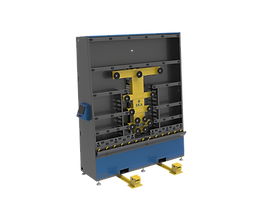
GLASS LOADING AND UNLOADING CONVEYOR


